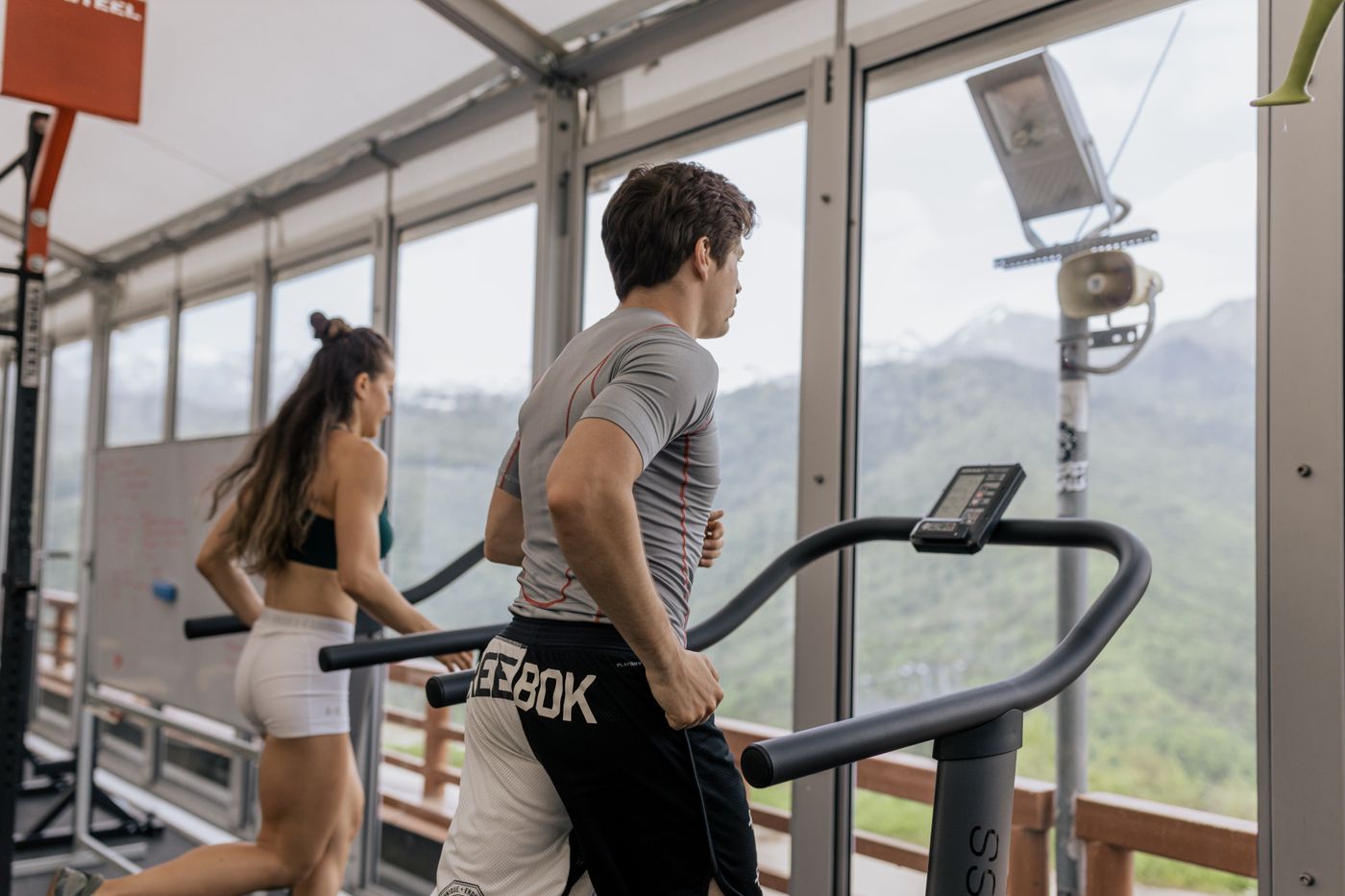
The 30-second answer: Get a walking pad if you mainly want to walk while working, live in a small space, and need to store it away — it’s flat, light, and quiet. Get a treadmill if you want to run, do incline work, or train for distance — it has the speed, cushioning, and motor for it, at the cost of size and price.
A walking pad and a treadmill look like the same idea at different sizes — but they’re built for different jobs. One is for moving more while you work and live in a small space; the other is for running and structured cardio. Buying the wrong one means either a machine that can’t keep up or one that swallows your room.
This is an honest head-to-head: walking pad vs treadmill, decided by space, goals, and use. Below is the comparison that matters and clear guidance on which fits you — based on our analysis of specs and owner-feedback patterns.
The core differences
| Factor | Walking pad | Treadmill |
|---|---|---|
| Top speed | ~Walking pace (often capped low) | Walking through running |
| Incline | Usually none | Often adjustable |
| Footprint | Slim, flat, storable | Large, often fixed |
| Noise | Low (brushless options) | Higher under running |
| Motor / durability | Sized for walking | Sized for running loads |
| Price | Lower | Higher |
| Best for | Under-desk walking, small spaces | Running, structured cardio |
How to choose
The decision really comes down to three questions:
- Will you run? If yes, a treadmill — walking pads aren’t built for it and will overheat or simply cap out. If you only walk, a walking pad is lighter, cheaper, and quieter.
- How tight is your space? A walking pad slides under a couch or bed and works under a standing desk. A treadmill needs a dedicated spot. In an apartment, a quiet walking pad is usually the realistic choice.
- What’s the goal? Daily movement and step count while you work points to a walking pad. Cardio fitness, training, and incline point to a treadmill.
Where each one wins
Walking pad wins when you want to add steps during the workday, keep the floor clear, walk quietly above a neighbor, or spend less. It’s the better “move more without changing your life” tool — and on carpet the right one still performs.
Treadmill wins when running is the point — the speed range, deck cushioning for impact, incline, and a motor built for sustained higher loads are things a walking pad simply doesn’t have.
Frequently asked questions
Is a walking pad better than a treadmill? Neither is “better” — they’re for different jobs. A walking pad is better for under-desk walking and small spaces; a treadmill is better for running and structured cardio. Match it to how you’ll actually use it.
Can you run on a walking pad? Generally no. Most walking pads cap at a walking pace and aren’t built for running loads. If you want to run, get a treadmill.
Which is better for a small apartment? A walking pad, almost always — it’s slim, storable, and quieter. See our quietest walking pad for an apartment guide.
Is a walking pad enough exercise? For adding daily movement and steps, it’s genuinely useful — see are walking pads worth it. For cardiovascular training, a treadmill (or other cardio) does more.
Are walking pads cheaper than treadmills? Usually yes — a capable walking pad costs less than a comparable treadmill, partly because it does less (no running, no incline). See best walking pad under $300.
The verdict
If you want to walk more while you work and keep your space clear, the walking pad wins on size, noise, and price. If you want to run or train, the treadmill is the only real answer. Decide on the run question first — it settles most of this. If you’re leaning walking pad, start with our carpet and under-$300 guides. If you want the raw numbers side by side, the walking pad spec comparison puts 11 models in one table.
We analyze specs and owner-feedback patterns, and re-review this guide as new models are released. We never claim to have physically tested gear we haven’t. Prices and availability are shown live on Amazon via the links above.