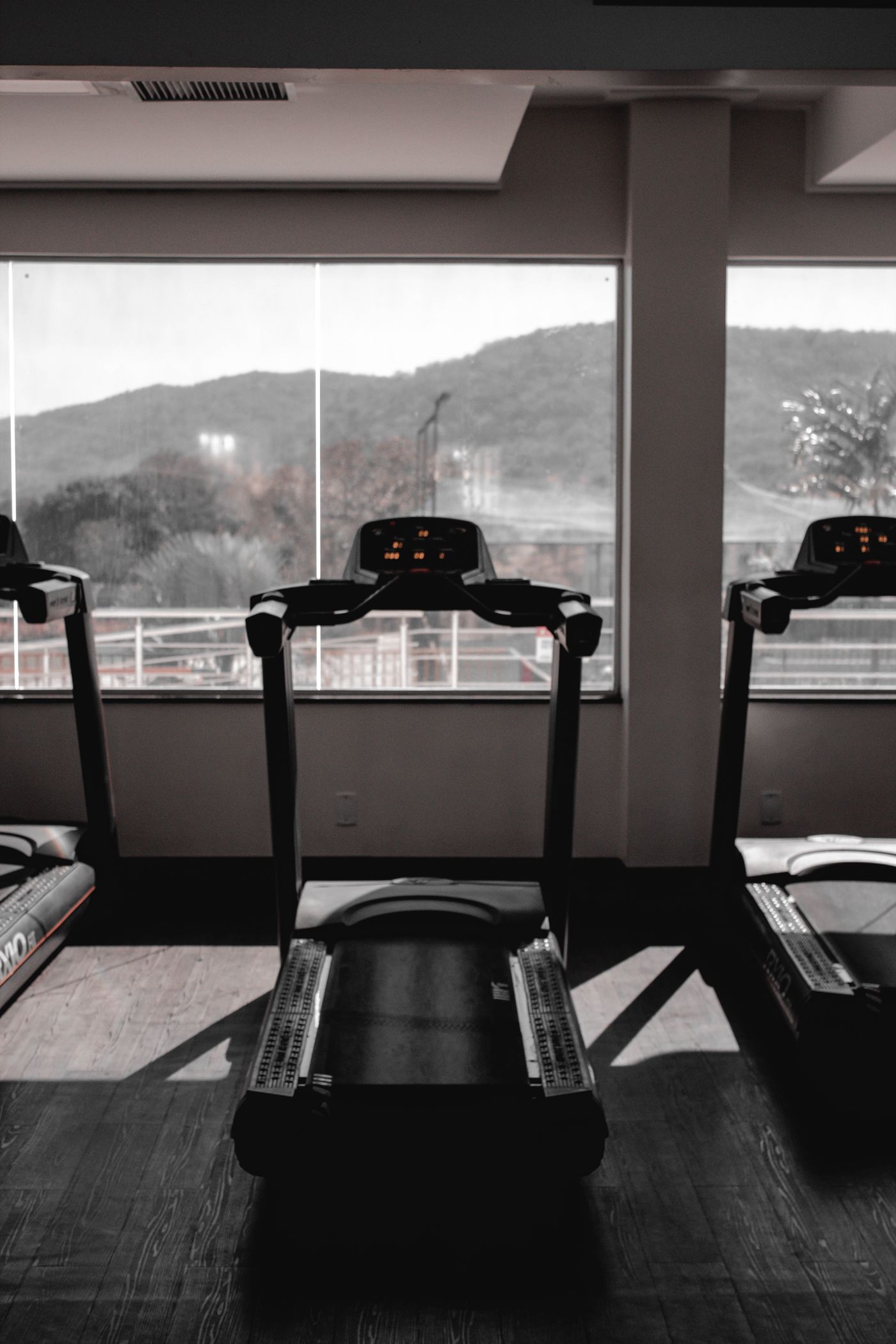
The 30-second answer: For an apartment you want a brushless motor (lower, smoother hum), a cushioned deck that softens each step, and a mat underneath to kill impact transfer to the floor below. Skip the cheapest units — their motors whine and their thin decks transmit every footfall.
In an apartment, a walking pad has two ways to annoy people: the motor hum you hear, and the footfall thud that travels through the floor to your downstairs neighbor. Most “quiet” reviews only measure the first one. The second is what gets you a noise complaint.
This guide is built for apartment living: which walking pads stay genuinely quiet — both in the air and through the floor? Below are the features that decide it, a comparison table, and our picks — based on our analysis of specs and owner-feedback patterns.
Why apartment noise is two problems
Both matter, and every pick below is judged against them:
- Motor noise (airborne). Brushless motors run quieter and smoother than brushed ones, especially at walking speeds. This is the hum you and your roommates hear.
- Impact noise (structure-borne). Your footsteps thud into the deck and through the floor. A cushioned deck plus a dense mat underneath absorbs most of it — this is what the neighbor below hears.
- Rattle and belt slap. Cheap units develop rattles and a slapping belt over time. Build quality and a well-tensioned belt keep things smooth.
How we picked
We weighted apartment-specific quiet over headline speed: motor type and measured/owner-reported noise at walking pace, deck cushioning, belt quality, and how much owners in apartments relied on a mat to stop floor transfer. We treated “quiet” as both airborne and structure-borne, since the downstairs thud is the real apartment risk. Marketing claims were ignored unless documented specs and owner reports backed them up.
Quick comparison
| Pick | Best for | |
|---|---|---|
| Sperax Walking Pad · Top Overall | Quietest for Apartments Overall | Check → |
| Goplus 2-in-1 Treadmill · Best Value | Best Value Quiet Pick | Check → |
| Niceday Walking Pad (3HP Brushless) · Brushless Quiet | Best for noise-sensitive heavy-duty use | Check → |
| WalkingPad A1 Pro · Foldable Quiet | Best foldable quiet pad for small apartments | Check → |
| WalkingPad P1 · Slim & Quiet | Best low-speed quiet pad for downstairs neighbors | Check → |
Our picks
Sperax Walking Pad — Quietest for Apartments Overall
This tops the list for the brushless motor + cushioned deck combo — a low, smooth hum you can take calls over, and enough deck give to soften each step before it reaches the floor. Add a mat underneath and it’s genuinely apartment-friendly.
- Low, smooth brushless-motor hum
- Cushioned deck softens footfall
- Quiet enough for calls
- Walking speeds only, not running
- Best paired with a mat for upstairs units
Goplus 2-in-1 Treadmill — Best Value Quiet Pick
If you’re keeping it lean, the smart move is a unit that spends its budget on the motor and deck — the two things that control noise — instead of extras. This pick stays quiet for daily walking without the premium markup.
- Quiet motor for the price
- Adequate deck cushioning
- Honest specs
- Fewer features
- Definitely add a mat on upper floors
Niceday Walking Pad (3HP Brushless) — Best for noise-sensitive heavy-duty use
Niceday’s pad lists a 3HP brushless motor — brushless designs cut the mechanical hum brushed motors make — plus a 400 lb capacity and auto incline. The listing claims whisper-quiet operation (maker states ‘under 25 dB,’ a marketing figure, not independently verified). For apartments, the brushless motor and heavy build are the genuinely relevant quiet specs.
- Brushless motor targets low motor hum
- High 400 lb capacity and auto incline
- Widened belt with SGS/ASTM testing claims
- 'Under 25 dB' is a maker claim, not verified; footfall still travels through floors
- Heavier unit, harder to move
WalkingPad A1 Pro — Best foldable quiet pad for small apartments
The WalkingPad A1 Pro uses a brushless ~2HP motor and a 180° folding design with a 300 lb capacity. Owner patterns consistently note the belt and motor are quiet enough that shoelace and foot-strike sound dominate — though several mention the cooling fan becoming audible after a while. No specific dB figure is published.
- Brushless motor keeps mechanical noise low
- Folds in half for apartment storage
- 300 lb capacity in a slim frame
- Cooling fan can become audible during longer sessions
- No maker dB figure published
WalkingPad P1 — Best low-speed quiet pad for downstairs neighbors
The WalkingPad P1 is a slim, 180° foldable pad with a 220 lb capacity and a top speed around 3.75 mph. The maker notes it runs quietly at 2 km/h and below, suiting slow, neighbor-friendly walking; reviewers note its 1HP brushed motor can be slightly louder than the brushless A1 Pro at higher speeds. No specific dB figure is published.
- Very slim, slides under furniture
- Marketed as quiet at low (≤2 km/h) speeds
- FootSense auto speed control
- 1HP brushed motor louder than A1 Pro at speed
- Lower 220 lb capacity
What to look for (apartment quiet checklist)
- Brushless motor. Lower, smoother hum than brushed motors at walking speed.
- Cushioned deck. Softens each footfall before it reaches the floor.
- A dense mat underneath (non-negotiable upstairs). Kills most of the impact transfer to the unit below — cheap insurance against complaints.
- Solid build, well-tensioned belt. Prevents rattles and belt slap that develop on cheap units.
- Walk on carpet or over a mat. Hard floors transmit more; if you’re on carpet, see our walking pad for carpet guide.
How quiet, really — by the numbers
Across sources, the thud that reaches downstairs neighbors is structure-borne footfall, not motor noise — so the brushless-motor and cushioned-deck specs below matter, but a mat and low speeds matter just as much. Only some makers publish a dB-style figure, and all are manufacturer claims, not independent measurements.
| Pad | Maker-stated noise | Max speed | Capacity | Quiet-relevant notes |
|---|---|---|---|---|
| Sperax Walking Pad | ”Below 45 dB” (listing claim) | ~3.8 mph | 320–340 lb | Steel frame + multi-layer shock/noise shield; brushed motor |
| Goplus 2-in-1 | ”Under 45 dB” (listing claim) | 3.8 / 7.6 mph | 265–300 lb | 7-layer cushioned belt + 6 shock pads; handlebar adds bulk |
| Niceday 3HP | ”Under 25 dB” (claim — unverified) | n/p for walk model | 400 lb | Brushless motor (low hum); cushioned belt; heavy build |
| WalkingPad A1 Pro | Not published | ~3.7 mph | 300 lb | Brushless ~2HP; folds 180°; fan audible over time |
| WalkingPad P1 | Not published | ~3.75 mph | 220 lb | 1HP brushed (louder at speed); slim deck; FootSense |
A dB number is only meaningful up close; for an apartment, prioritize a brushless motor, a cushioned deck, a mat underneath, and keeping the pace low.
Why is my walking pad so loud when I walk?
If you already own a pad and it has got noisy, the cause is usually one of five things — and most are fixable in ten minutes without replacing anything.
- Belt tension has drifted. A belt that slips slaps against the deck on every step. Most pads adjust at the rear roller with two hex bolts; tighten evenly, a little at a time, and check your manual for the maker’s spec.
- The deck is sitting straight on a hard floor. Laminate, tile, and floating floors behave like a drum skin. A dense rubber mat under the pad is the single biggest fix for thud.
- You are walking faster than the deck likes. At a brisk pace your gait shifts from a roll to a strike, and strike noise is exactly what travels downward. Slowing down usually drops the thud noticeably.
- Grit has worked its way under the belt. Dust and hair migrate under the belt and grind against the deck. Wipe the deck under the belt edge, and re-lubricate only if your manual calls for it.
- The motor itself is wearing. A whine that has slowly got worse over months is usually the motor. Brushed motors degrade this way; brushless ones rarely do.
A useful way to tell them apart: if it is a hum you hear in the room, it is the motor. If it is a thud your neighbour notices and you barely do, it is footfall — and footfall is solved with a mat and a slower pace, not a new pad.
The one accessory worth buying with it
A dense treadmill mat under the pad is the cheapest fix in this whole category. It stops the deck creeping, damps the low-frequency thud that travels through a floor, protects the surface underneath, and on carpet it stops the pad sinking into pile. It costs a fraction of the pad and solves more problems than any spec upgrade.
Frequently asked questions
How loud is a walking pad in an apartment? A good brushless unit at walking speed is roughly conversation-level airborne noise. The bigger apartment issue is footfall through the floor, which a cushioned deck plus a mat largely solves.
Will my downstairs neighbor hear my walking pad? They can hear footfall thud more than the motor. A dense mat or rubber tiles under the pad absorbs most of it. On upper floors, treat the mat as essential.
Are brushless walking pads quieter? Generally yes — brushless motors run smoother and quieter than brushed ones, especially at the low speeds walking pads use.
Do I need a mat under my walking pad? In an apartment, yes — especially above another unit. It cuts impact noise and protects your floor. See our carpet guide if you’re walking on pile.
Can I use a walking pad during video calls? At a slow pace on a quiet unit, often yes. Test your mic; the motor hum is usually low enough that calls are fine while walking gently.
Why is my walking pad so loud when I walk? Usually loose belt tension, a hard floor with no mat under the deck, or a pace fast enough that your feet strike rather than roll. Check belt tension first, then add a dense mat, then slow down.
Are walking pads loud for downstairs neighbours? The motor rarely carries; the footfall does. With no mat, each step transmits into the floor structure as a low thud that is clearly audible below. A dense mat plus a gentle walking pace resolves most complaints.
How do I stop my walking pad thudding through the floor? Layer it. A dense rubber mat rather than thin foam, the pad centred on the mat instead of half off it, and a slower pace. Rubber gym tiles work better than a single thin mat.
The verdict
A quiet apartment walking pad isn’t just about the motor — it’s a brushless motor, a cushioned deck, and a mat underneath working together to keep both the hum and the thud down. Get all three and you can walk all day without a single knock on the door. Many of these double as a good carpet pad too. If you want the raw numbers side by side, the walking pad spec comparison puts 11 models in one table.
We analyze specs and owner-feedback patterns, and re-review this guide as new models are released. We never claim to have physically tested gear we haven’t. Prices and availability are shown live on Amazon via the links above.