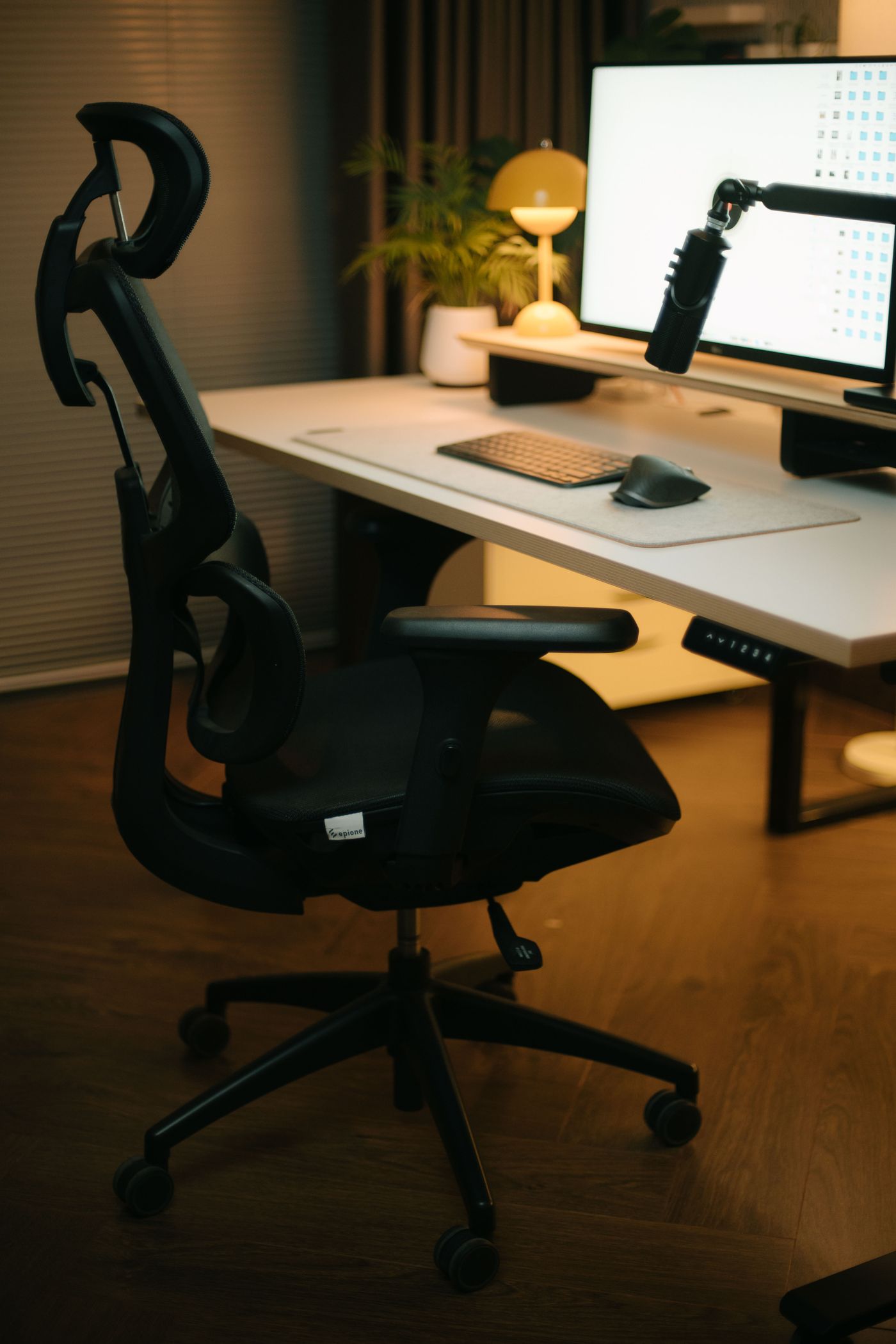
The 30-second answer: For a short person you want a footrest with enough height to bring your knees to ~90° (many are too low), an adjustable angle so your ankles sit neutral, and a non-slip surface big enough for both feet. Pair it with a chair set so your elbows are at desk height — see our ergonomic chair for short people guide.
If you’re on the shorter side, most desks leave your feet dangling — and that’s not just uncomfortable, it pulls you forward off your chair’s lumbar support and loads the backs of your thighs. A footrest is the cheap fix that quietly solves a posture problem you’ve probably blamed on your chair.
This guide is built for shorter users specifically: which footrests actually fit and help? Below are the features that decide it, a comparison table, and our picks — based on our analysis of specs and owner-feedback patterns.
Why dangling feet are a real problem
A footrest addresses three things, and every pick below is judged against them:
- Lost lumbar contact. When feet dangle, you slide forward and lose contact with the backrest. Feet supported = you sit back into the support.
- Thigh pressure. An unsupported leg puts the chair’s front edge into the back of your thigh, restricting circulation. A footrest offloads that.
- Ankle/knee angle. Feet flat at ~90° knees is the goal. The right height and tilt get you there; too-low footrests don’t.
How we picked
We weighted fit for shorter users over gimmicks: usable height range (enough to reach a 90° knee at a standard desk), angle adjustment, surface size and grip, stability under active feet, and whether shorter owners reported it actually closing the gap rather than sitting uselessly low. Marketing claims were ignored unless documented specs and owner reports backed them up.
Quick comparison
| Pick | Best for | |
|---|---|---|
| Everlasting Comfort Foot Rest · Top Overall | Best for Short Users Overall | Check → |
| Kensington SmartFit SoleMate · Best Adjustable Height | Best Height-Adjustable Footrest | Check → |
| ErgoFoam Adjustable Foot Rest · Best Soft Foam | Best for getting short legs to a flat-foot position | Check → |
| HUANUO Adjustable Footrest · Best Tilt | Best for adjustable height plus foot angle | Check → |
Our picks
Everlasting Comfort Foot Rest — Best for Short Users Overall
This tops the list because it brings real height plus an adjustable tilt — enough to get a shorter user’s knees to ~90° with ankles neutral, on a grippy surface that holds both feet. It fixes the dangle instead of just propping your toes.
- Enough height for a true 90° knee
- Adjustable angle for neutral ankles
- Non-slip, full-foot surface
- Takes under-desk floor space
- Premium for the adjustability
Kensington SmartFit SoleMate — Best Height-Adjustable Footrest
If your desk is on the high side, the priority is height adjustment that rises far enough to close a bigger gap. This pick goes taller than most so even at a high desk your feet land flat.
- Rises higher than typical footrests
- Good for tall, fixed-height desks
- Stable at full height
- Bulkier
- More than you need at a low desk
ErgoFoam Adjustable Foot Rest — Best for getting short legs to a flat-foot position
The ErgoFoam stacks to change height (roughly 3.9–5.9 inches), letting shorter users raise their feet to a flat, supported position when the chair sits too high. It’s a high-density foam wedge with a non-slip base. Owners cite the comfort and height options; versus a hard platform, very firm-foot users may prefer rigid.
- Adjustable height (~3.9–5.9") brings feet flat
- High-density foam resists compression
- Double-sided non-slip base, lifetime warranty
- Soft foam, not a rigid platform
- Can feel low for the tallest desks even at max
HUANUO Adjustable Footrest — Best for adjustable height plus foot angle
The HUANUO combines three height positions (about 4.33, 5.51, 6.7 inches) with up to 30° of tilt, so shorter users can both raise their feet and angle them to keep ankles neutral; a textured top adds light stimulation. Owners like the height-plus-tilt flexibility; the note is a harder plastic surface than foam rests.
- Three height positions plus up to 30° tilt
- Textured surface for circulation/comfort
- Non-slip feet, arrives pre-assembled
- Hard plastic surface, less cushioned than foam
- Tilt rocks freely on some units rather than locking
What to look for (short-user footrest checklist)
- Enough height for 90° knees. Many footrests are too low for shorter users at a standard desk — check the height range.
- Adjustable tilt. Keeps ankles neutral and lets you shift position through the day.
- Full-foot, non-slip surface. Both feet should sit comfortably without sliding.
- Stable under movement. It shouldn’t skate away when you shift your weight.
- Pair with chair height. Set the chair so elbows meet the desk, then add the footrest — see our short-person chair guide.
Frequently asked questions
Do I need a footrest if I’m short? If your feet don’t sit flat with knees near 90° at your desk, yes — a footrest restores that posture and takes strain off your lower back and thighs. It’s one of the highest-value, lowest-cost ergonomic fixes for shorter users.
How high should a footrest be? High enough that your knees are at roughly 90° and your feet rest flat. For shorter users at a standard desk, that often means a taller footrest than the default models provide.
Footrest or a lower chair — which is better? Lower the chair first so your elbows meet the desk; if your feet then dangle, add a footrest. The two work together — see our ergonomic chair for short person guide.
Does a footrest help lower back pain? It can, indirectly — supported feet help you sit back into your chair’s lumbar support instead of sliding forward. For the chair side of that, see office chair for lower back pain under $300.
Rocking footrest or fixed — which should I get? A rocking/tilting footrest keeps your ankles moving, which some people find more comfortable over long sessions. A fixed one is simpler and cheaper. Either works if the height is right.
The verdict
For a shorter user, the right footrest is the one with enough height and the right tilt to put your feet flat at 90° — not just a low block for your toes. Fix the dangle and you stop sliding off your lumbar support. Combine it with a properly sized chair from our short-person chair guide and the whole setup finally fits.
We analyze specs and owner-feedback patterns, and re-review this guide as new models are released. We never claim to have physically tested gear we haven’t. This isn’t medical advice. Prices and availability are shown live on Amazon via the links above.