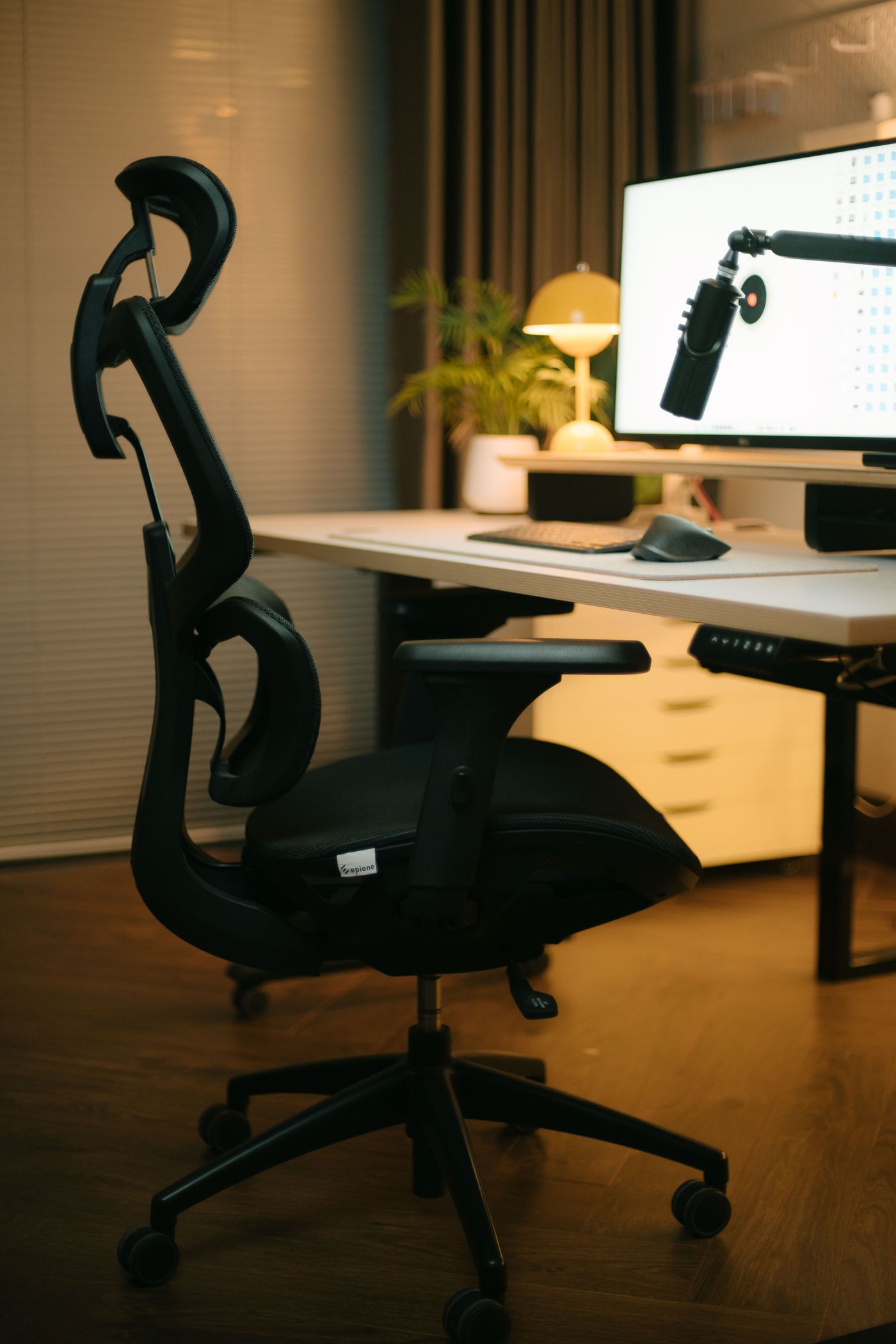
The 30-second answer: For lower-back pain under $300 you want adjustable lumbar support (height and depth, not a fixed bump), a seat depth that lets you sit fully back, and a recline you can lock at 100–110° so the backrest carries your weight. Skip chairs that only advertise “ergonomic mesh” with no lumbar adjustment.
If your lower back aches by mid-afternoon, the chair is usually the culprit — and you don’t need to spend $1,000 to fix it. The problem is that most chairs under $300 fake their ergonomics: a molded foam bump where lumbar support should be, a seat too deep to sit back in, and a recline that locks bolt-upright so you’re never actually supported.
We built this guide around one question: which chairs under $300 genuinely protect the lower back? Below are the features that decide it, a comparison table, and our picks for different bodies and setups — based on our analysis of specs and owner-feedback patterns.
Why most budget chairs hurt your back
Three things go wrong below $300, and every pick here is judged against them:
- Fake lumbar support. A fixed foam curve sits where the average spine is — almost never where yours is. Real support adjusts up/down and in/out to meet your actual lumbar curve.
- Seat too deep. If the seat pan is too long, you either perch on the front edge (no back contact) or slump back (no support). A back-friendly chair lets you sit with your spine against the backrest and ~2–3 fingers behind the knee.
- Upright-only recline. Sitting at a rigid 90° loads the lumbar discs hardest. A backrest that reclines and locks slightly back lets the chair carry weight your spine otherwise absorbs.
How we picked
We weighted back-protective factors over flashy spec-sheet numbers: lumbar adjustability (true height + depth beats a fixed bump), seat-depth range, recline lock positions, seat firmness as reported over months (not day one), and whether owners with existing back pain reported relief rather than just comfort. Marketing terms like “ergonomic” were ignored unless the documented adjustments backed them up.
Quick comparison
| Pick | Best for | |
|---|---|---|
| Colamy Atlas · Top Overall | Best for Lower Back Pain Under $300 Overall | Check → |
| Sihoo M57 · Best Value | Best Value Chair for Lower Back Pain | Check → |
| Oline ErgoPro · Budget Pick | Best budget lockable-recline option | Check → |
| NOUHAUS Ergo3D · Best Mesh | Best for breathable all-day lumbar support | Check → |
| Branch Ergonomic Chair · Best Adjustable | Best for dialed-in lumbar positioning | Check → |
Our picks
Colamy Atlas — Best for Lower Back Pain Under $300 Overall
What puts this at the top is lumbar support you can actually position — height and depth — paired with a recline that locks slightly back so the chair, not your spine, carries the load. That combination is what separates real back relief from a chair that just looks ergonomic.
- Lumbar adjusts both height and depth
- Recline locks at multiple angles
- Seat depth range suits most heights
- Assembly takes a bit longer
- One of the pricier picks in this guide
Sihoo M57 — Best Value Chair for Lower Back Pain
If you’re keeping it lean, the smart move is a chair that spends its budget on the adjustments that matter — lumbar and recline — instead of armrest gimmicks. This pick keeps the ergonomics honest and skips the fake-premium markup.
- Real lumbar adjustment at a low price
- Lockable tilt
- Honest, no-inflated specs
- Simpler armrests
- Fewer finish options
Oline ErgoPro — Best budget lockable-recline option
The ErgoPro is a lower-priced mesh chair with 3D lumbar support, 4D armrests, and a 90–135° recline that locks — documented lumbar and recline adjustability at the most affordable point in this guide. Owner patterns are favorable on value and adjustment range, with the usual budget-chair caveats around long-term cushion and wheel durability.
- 3D adjustable lumbar support
- 90–135° recline with lock and tilt tension
- 4D armrests, rated over 300 lbs, low price
- Long-term durability is the typical budget question
- Headrest/seat comfort is hit-or-miss per owners
NOUHAUS Ergo3D — Best for breathable all-day lumbar support
The Ergo3D pairs a 3D-adjustable lumbar pad with a full breathable mesh back and a backrest that reclines to about 135° with tilt lock — the core ask for this guide: a lumbar piece you can actually move and a recline you can lock. Owners cite the mesh breathability and 4D armrests; the recurring note is that seat firmness takes some dialing in.
- 3D adjustable lumbar that moves to fit the lower back
- Reclines to ~135° with lockable tilt tension
- Breathable mesh back rated to 330 lbs
- Seat padding runs firm for some owners
- Armrests can loosen over time per owner feedback
Branch Ergonomic Chair — Best for dialed-in lumbar positioning
Branch’s Ergonomic Chair offers height-adjustable, removable lumbar support and a lockable recline, and it sits at the more premium end of this shortlist. The appeal is sliding the lumbar piece to your exact lower-back spot rather than living with a fixed bump. Owners praise the build feel; some note the seat is firmer than pricier chairs.
- Height-adjustable, removable lumbar support
- Lockable recline with tilt-tension control
- Recycled mesh back, widely available
- Firmer seat foam not for everyone
- Near the top of the budget at full price
What to look for (back-pain buyer’s checklist)
- Adjustable lumbar — height and depth. A fixed bump is a red flag; you need to meet your curve.
- Seat depth you can sit fully back in. Aim for ~2–3 fingers of gap behind your knees with your back against the rest.
- Recline that locks at 100–110°. Slight backward lean offloads the lumbar discs; a lock keeps it there.
- Adjustable seat height so feet sit flat. Knees at ~90°, feet flat (or on a footrest) takes pressure off the lower back.
- Firm-but-not-hard seat foam. Too soft and you sink into a slump; molded cold-cure foam holds shape longer.
Frequently asked questions
What kind of chair is best for lower back pain? One with adjustable lumbar support (height and depth), a seat depth you can sit fully back in, and a recline you can lock slightly back. Those three do more for the lower back than any single “ergonomic” label.
Is mesh or foam better for back pain? Either can work — what matters is the lumbar adjustment behind it, not the material. Mesh runs cooler; quality foam holds its shape. A mesh chair with no real lumbar adjustment is no better than a foam one.
Can a chair under $300 really help lower back pain? Yes, if it has genuine adjustments rather than a fixed foam curve. The price ceiling for real lumbar adjustability and a lockable recline sits comfortably under $300 — you’re mostly paying for brand and finish above that.
Should I recline or sit upright with lower back pain? A slight, supported recline (around 100–110°) generally loads the lumbar discs less than a rigid 90° posture. The key is that the backrest is locked there so it actually carries your weight.
What if my feet don’t reach the floor? Lower the seat or add a footrest so your feet are flat and knees near 90°. Dangling feet pull you forward off the lumbar support and strain the lower back. If you’re on the shorter side, our ergonomic chair for a short person guide covers seat-height and depth fit.
The verdict
Under $300, the chairs that actually help your lower back aren’t the ones shouting “ergonomic” — they’re the ones with lumbar support you can position and a recline you can lock. Match the pick to your body and setup above, get your feet flat and your back against the rest, and the chair starts doing the work your spine has been doing all day. And if your pain follows the sciatic nerve specifically, add our seat cushion for sciatica picks. A chair is only one of five things that decide desk back pain — the full checklist is in desk setup for lower back pain.
We analyze specs and owner-feedback patterns, and re-review this guide as new models are released. We never claim to have physically tested gear we haven’t. This isn’t medical advice — if your pain is persistent or severe, see a clinician. Prices and availability are shown live on Amazon via the links above.